Gene editing analysis, simplified: a day at TIDE Genetics
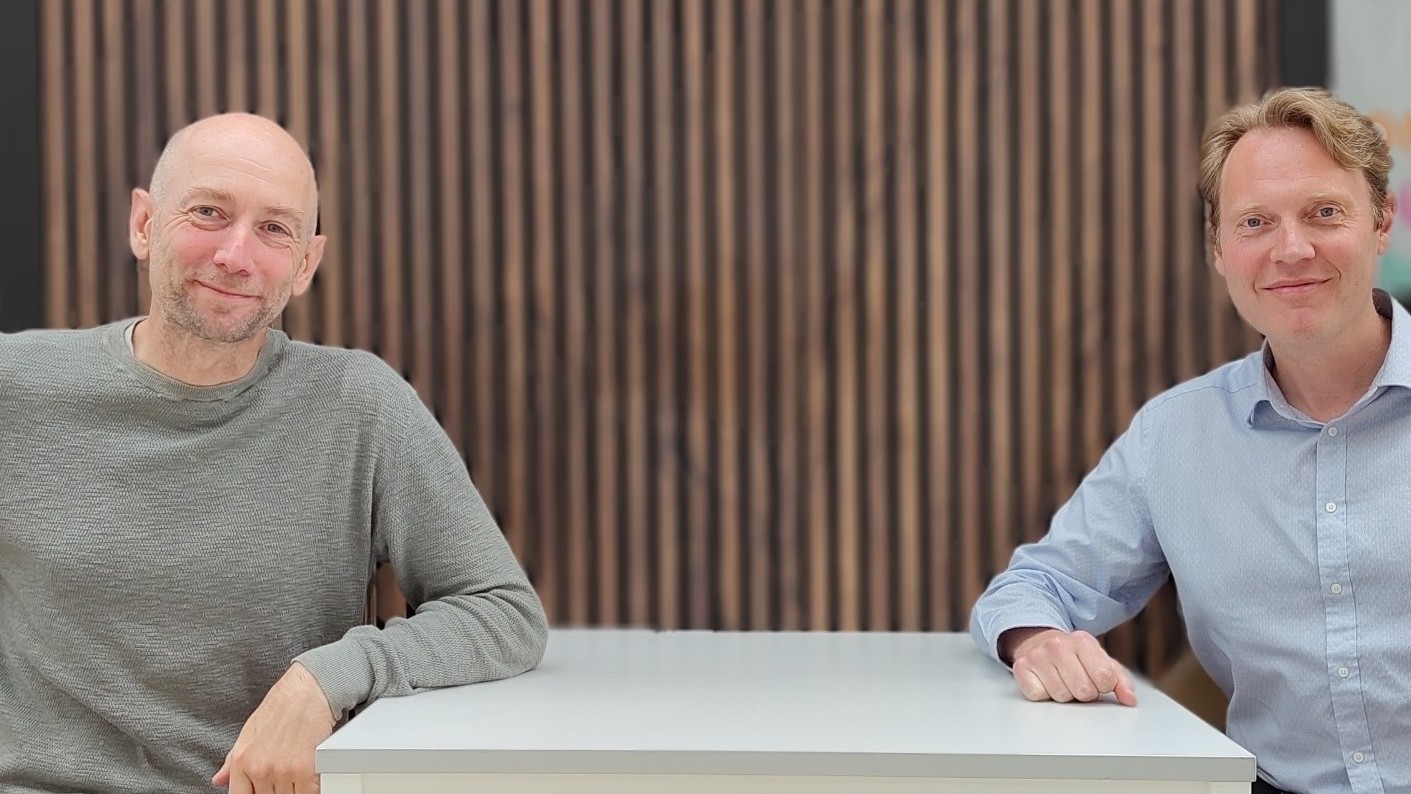
The TIDE software has helped the research community to analyze gene-editing outcomes since its publication more than 10 years ago. From on-target to off-target gene mutation analyses, TIDE is the simplest available tool but remains accurate across a broad range of scenarios.
Unlike next-generation sequencing (NGS), TIDE requires no specialized infrastructure, delivers results in hours rather than days, and does so accurately, but at a fraction of the cost. Most recently, the developers of CASGEVY, the first-ever CRISPR-based medicine, opted for TIDE rather than NGS to confirm gene-editing outcomes during lot release testing.
How Sanger sequencing decomposition works
After a CRISPR experiment, a pooled Sanger sequencing trace of the edited cell population looks like a clean read up to the cut site, then collapses into overlapping peaks. That “messy” region is in fact a superposition of many individual traces, one per indel variant present in the sample. TIDE performs gene editing analysis by decomposing that composite trace back into its components.
The method models the observed trace as a linear combination of the wild-type reference trace shifted by every plausible indel size (from large deletions to insertions of several bases). Solving for the mixture coefficients yields the full indel spectrum: the percentage of sequences carrying a +1 insertion, a −3 deletion, and so on, together with the total editing efficiency. A goodness-of-fit measure (R²) tells the user how well the model explains the data, so unreliable traces are flagged rather than silently misinterpreted. Because decomposition works on the trace itself, no cloning, no NGS library preparation, and no specialized infrastructure are required.
Two parameters control CRISPR indel quantification in practice. First, the decomposition window: the region around the cut site that is used for fitting, which the user can adjust when guides cut off-center or when the trace quality drops early. Second, the detection floor: in an independent head-to-head comparison (Yao et al., 2025), TIDE detected editing down to a 10% editing frequency, while the lowest frequency detected by ICE was 20%. That sensitivity matters most for early-stage screens and hard-to-edit loci, where editing rates are low and underestimation would wrongly report a failed experiment.
"TIDE is basically the pocket calculator of genetics," says TIDE Genetics' co-founder and chief scientific officer, Lorenzo Bombardelli. "When you need data from gene-editing experiments quickly, you do not want to open something more complicated; you do not need to do complex computations."
On a Wednesday morning in Amsterdam, that philosophy is on display.
Lorenzo opens the gates to the Health Innovation District, a start-up incubator in the south of Amsterdam. He walks past a patchwork of old loading bays and newly renovated biotech spaces that welcome life science start-up staff, researchers, and Sanquin Blood Supply's blood donors every day. The short walk takes him to his final destination: the laboratory of TIDE Genetics, a biotech company that provides fast, Sanger-based software for genome-editing experiments.
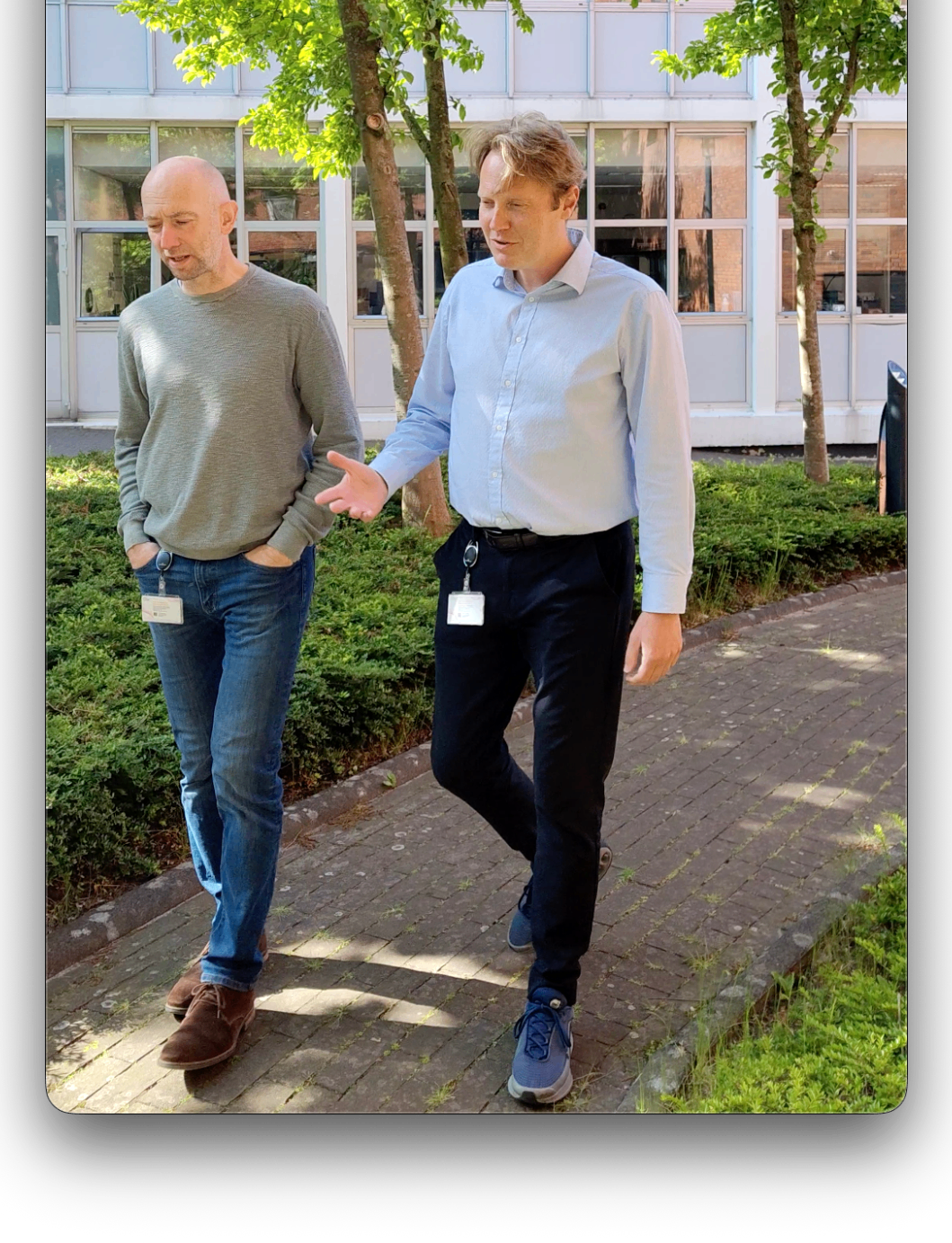
TIDE Genetics is the new trade name for Data Curators, incorporated at the start of 2023. They moved into the Health Innovation District Sanquin in July of the previous year. As to why they chose the Health Innovation District, the answer sticks to the company's theme of simplicity:
"Convenience; brutally put, it was about convenience and quality," Lorenzo says with a shoulder shrug. "We live in the city, the pricing is competitive, and the community managers are really engaging and do an amazing job at connecting start-ups."
In the true spirit of its straightforward approach to gene-editing analyses, TIDE Genetics maintains its spaces uncluttered, stripped of any distracting gimmicks. Less is more.
At 9 AM, Lorenzo switches on his laptop, which is placed almost in the center of the room. Surrounded by incubators, PCR machines, and all the vital equipment typical of a functional lab, he throws his bag into the desk drawer, sits at his office chair, and pulls himself closer to the desk. He is about to pick up where he left off the day before: TIDE Genetics' dedicated protocol for base-editing repair.
"The lab activity is really about finding the best PCR strategies and protocols to optimize TIDE for difficult problems, such as accurately detecting and quantifying elusive targets. TIDE is our main activity, our main product, our identity."
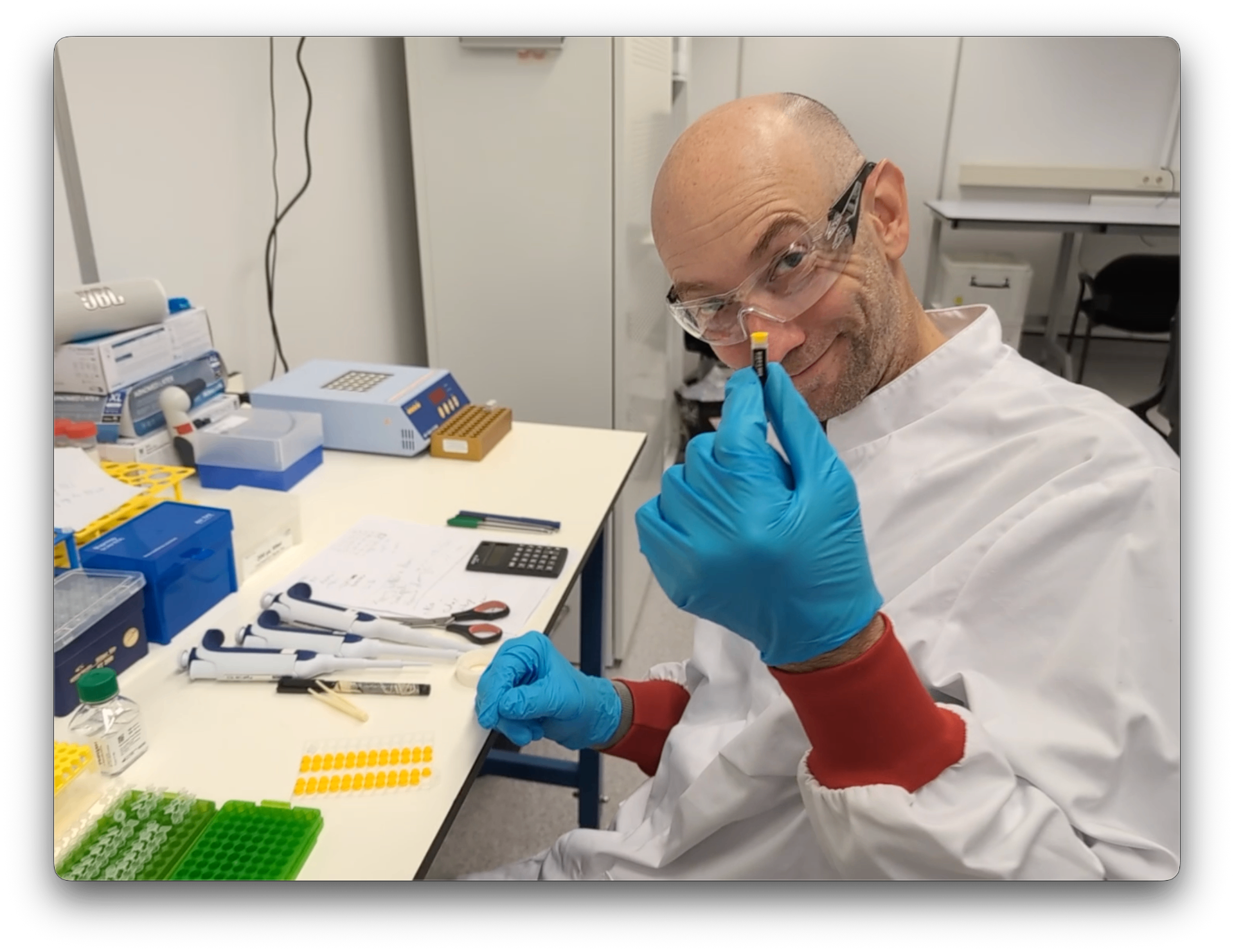
They use collaborator samples, always with the same goal of developing solid approaches that work seamlessly so scientists can use TIDE and forget about more complicated stuff.
The scientific community, however, is less straightforward than the solutions TIDE provides. Lorenzo's daily lab work involves balancing two separate worlds that barely understand each other's needs and problems despite attending the same conferences: academia and the life sciences industry. On the one hand, TIDE Genetics' R&D addresses the academic researcher's need for modern, accurate tools for analyzing Sanger sequencing data. On the other hand, the team increasingly works with companies that need solid applications to address regulatory requirements. These companies want to know how regulators work and differ across Europe, the U.S., and Asia, and how gene-editing data are assessed under different regulatory frameworks.
Lorenzo's work can take a surprising turn beyond that—an entertaining one, but surprising, nevertheless. One project involves the fun challenge of using TIDE to accelerate plant breeding. On some days, he brings fruit to the office, not always to indulge in them, but to extract their DNA and create new software features that can literally compare apples and oranges (or pears).
In another room, just a couple of steps from the lab, co-founder and CEO Jelle ten Hoeve has started the day at his screen, working through the project timelines, compliance checklists, and client correspondence that keep the operation running. Although both Lorenzo's and Jelle's responsibilities overlap (in the true spirit of any start-up), Jelle focuses on the operational and quality infrastructure that enterprise clients depend on. These tasks include coordinating projects, managing compliance procedures, and making sure TIDE meets the rigorous standards required in regulated environments.
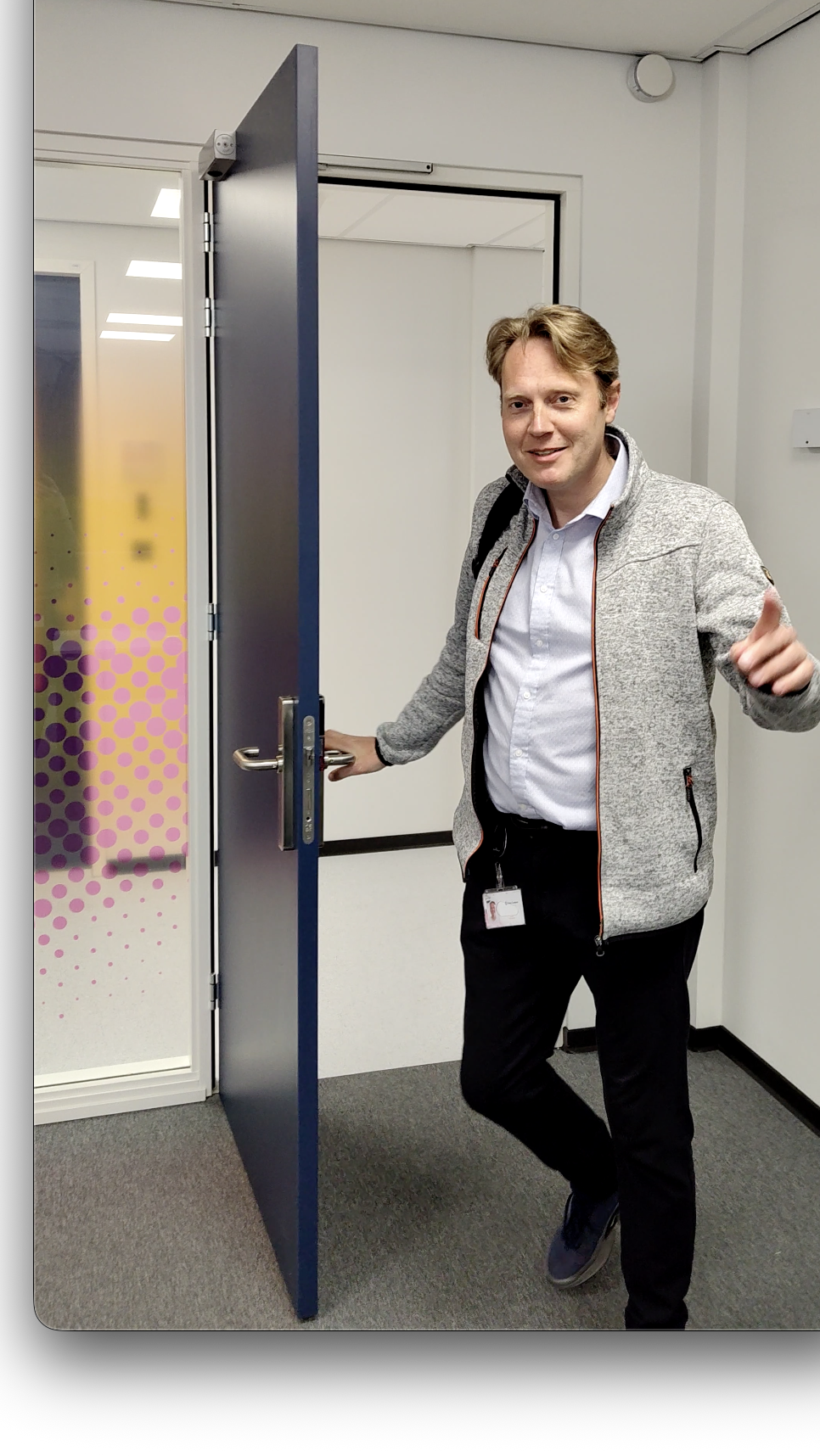
It is in this high-stakes work on the regulatory environment that Lorenzo's, Jelle's, and the rest of the team's efforts come together. For example, a company developing a gene-therapy candidate must show regulators, such as the U.S. Food and Drug Administration and the European Medicines Agency, that a specific proportion of cells carry the intended edits. The software analyzing the outcomes cannot simply be an academic side project; it must be a mission-focused, rigorously tested system that guarantees solid procedures.
At TIDE Genetics, even a minor code change triggers a documented chain of custody: who flagged the issue, who approved it, and who holds the credentials to implement it. Every step is recorded and verifiable. For their largest clients, spanning Asia and Europe to North and South America, that paper trail culminates in a two-day on-site audit, during which external auditors scrutinize every policy, every procedure, and every protocol to the last detail.
The documentation, reporting, and auditing that happen behind the scenes make up a big part of what TIDE Genetics does. It may seem unglamorous, but it is a solid foundation that keeps clients reassured their results will hold up under regulatory scrutiny.
"It is a lot of behind-the-scenes work," Jelle says, "but it is what maintains our QC infrastructure running and what allows us to deliver on our vision: one reliable solution for every gene editing analysis."
At the end of the day, once the TIDE Genetics team has switched off the lab equipment, laptops, and lights, they have each contributed to the same vision: to get TIDE into every company in the field and build an interactive community of scientists who share the same need for powerful analysis, without the complexity.
"We want everybody to benefit from the most advanced features. We want to make TIDE, the pocket calculator, an even more popular one-stop shop. Everyone should have access to a quality, simple tool like TIDE that does all the complicated analysis of modern genetic engineering, including prime editing, base editing, and the more complex stuff."
By then, TIDE may represent something larger than software alone. Perhaps a step toward democratizing access to advanced gene-editing analysis.