Connecting dojos to data: how a martial artist keeps TIDE's quality standards honest
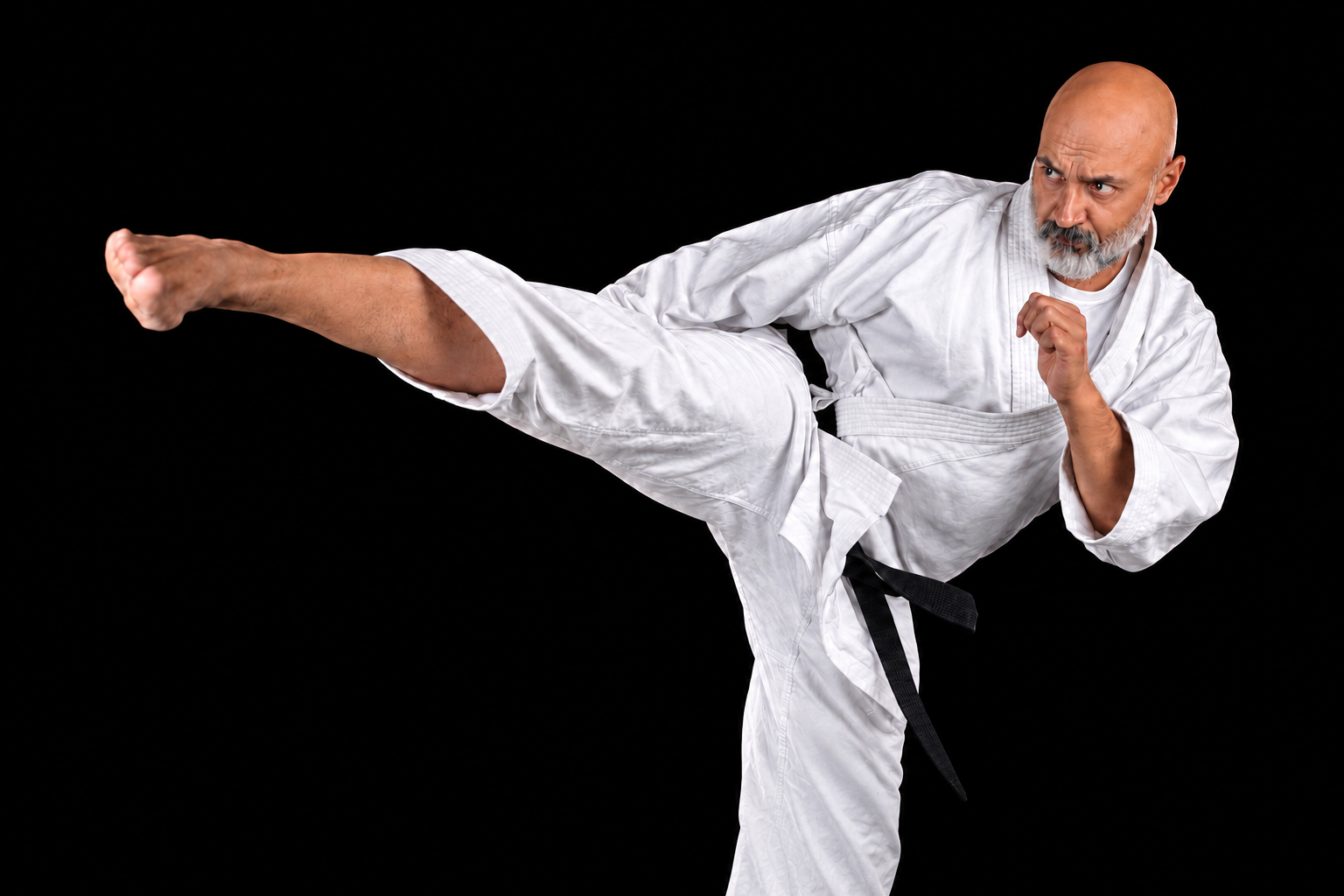
How can rigid quality standards align with an ever-changing landscape of gene editing? Ashok Bangher’s passion for martial arts and collaborative independent thinking may be the explanation. We had a conversation with Ashok, the independent quality consultant at TIDE Genetics, who ensures that every TIDE application supports reliable research, regulatory compliance, and, ultimately, patient safety.
Quality professionals have a hard-to-shake reputation for carrying a rigid mindset. We associate it with forms, procedures, and someone who tells everyone else what not to do. Yet this rigidity is the exact opposite of the attitude that leads to success in a rapidly advancing biotech ecosystem, as seen in gene-editing analysis. Of course, quality will always trump most other priorities, but since the field is constantly evolving, so must the TIDE Genetics team—including its quality.
That’s the type of dynamic, challenging environment Ashok Bangher thrives in. It is in this vibrant context that the TIDE Genetics team identifies the most urgent requirements in the gene-editing community, which ultimately shapes future TIDE software. Ashok’s requirement specification and design documentation ensure that TIDE is functional, mathematically correct, and scientifically and logically sound.
As the company caters more and more to drug developers, patient safety has become an increasingly important priority that is sometimes overlooked or treated implicitly in biotech. A software code issue in fundamental research is bad enough because it costs time, money, and patience. But an assessment mistake in a clinical context can cost patients their health and even their lives.
“We all know someone who needs medical treatment at some point or other, and we want to make sure we help provide the highest quality service possible, even though we’re an IT company,” he says and continues, “An incorrect outcome by our system can affect a drug’s formulation, delivery processes, or properties that impact a patient’s safety; we won’t allow that type of product to get through our checkpoints.”
Ashok describes himself as “just a quality guy,” but as the company’s main approver, he carries a heavy burden. His team’s and clients’ success depends on his diligence, scientific rigor, and ever-adapting skill set. Fortunately, he has the full support of what he describes as a flat company with some hierarchy, where every idea is equally valid, and responsibilities are clear.
The team’s collaboration is put on full display in auditing situations, where each team member’s individual attributes harmonize into a single problem-solving entity. An example of their welded, structured yet adaptable capacity became evident when a large multinational pharmaceutical client audited the TIDE application three times over several years. The first audit, conducted at TIDE Genetics in its early stages, failed to convince the pharmaceutical company fully. By the time the auditors returned for a final audit, TIDE Genetics had addressed the flagged findings head-on, gained experience and confidence, and the inspectors left the audit fully assured.
“Quality is an ongoing changing process,” he reminds us. “Staying rigid, even in a field like mine, can be detrimental to progress.”
That mindset requires a rare, fine balance between team mentality and independent thinking. Perhaps that intersectionality, as well as the discipline that drives Ashok’s dedicated work ethic, derives from his excitement for a type of martial arts called Budo, roughly translated as “the martial way.” It might surprise people who associate martial arts with aggression to learn how much of Ashok’s calm comes from exactly that discipline. But it’s not about violence at all.
“I guess I was a karateka before I was even born,” he says with a smile. He shares a line he often returns to that clarifies how martial arts have helped him expect the unexpected in quality: “It’s better to be a warrior in a garden than a gardener in a war.”
Ashok sees karate-do as a healthy challenge to achieve physical fitness and, importantly, mental discipline, etiquette, respect, and integrity. He points to another instinct that has implicitly affected his work practice: Seva, a concept from Sikhism, roughly meaning a life of service to others. These values are all embedded in the role of a quality professional and make him an essential component in the company’s efforts to adapt while maintaining strict quality standards.
Disclaimer: Ashok Bangher is an independent contractor providing quality consultancy services to TIDE Genetics.